







Master of Science and Engineering

Master in Electronics and Embedded Systems

Download the brochure
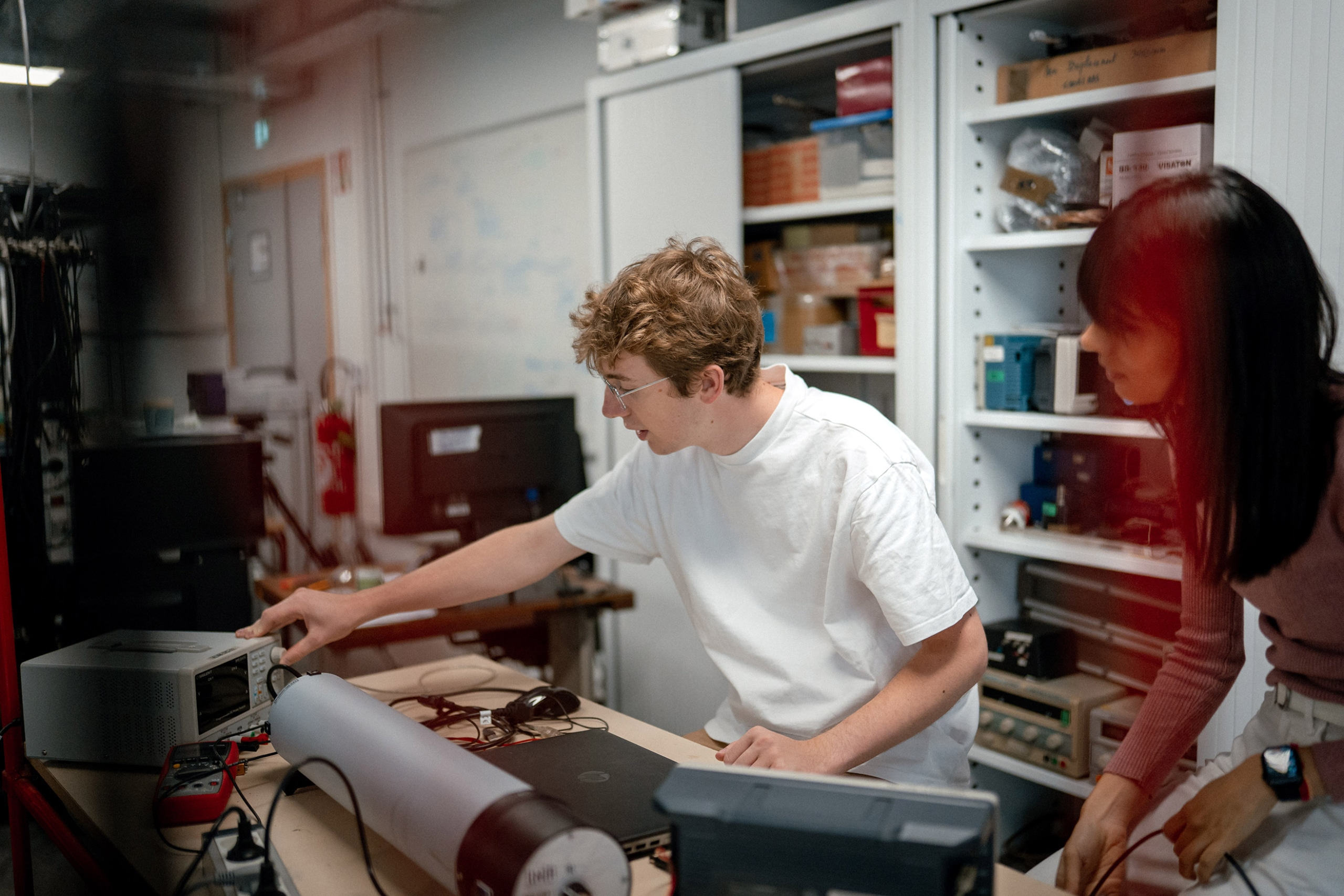
Students working on an electronic device
Campus Lille
Campus
Entry level Bachelor’s degree Entry level
Target qualification Master of Science and Engineering Target qualification
Design the intelligent systems powering tomorrow’s connected world.

From smart devices and autonomous systems to advanced electronics and nanotechnologies, embedded systems are at the heart of today’s digital transformation. This two-year Master of Science and Engineering gives you the scientific knowledge and practical experience to design, develop and optimize the electronic systems behind tomorrow’s connected technologies.

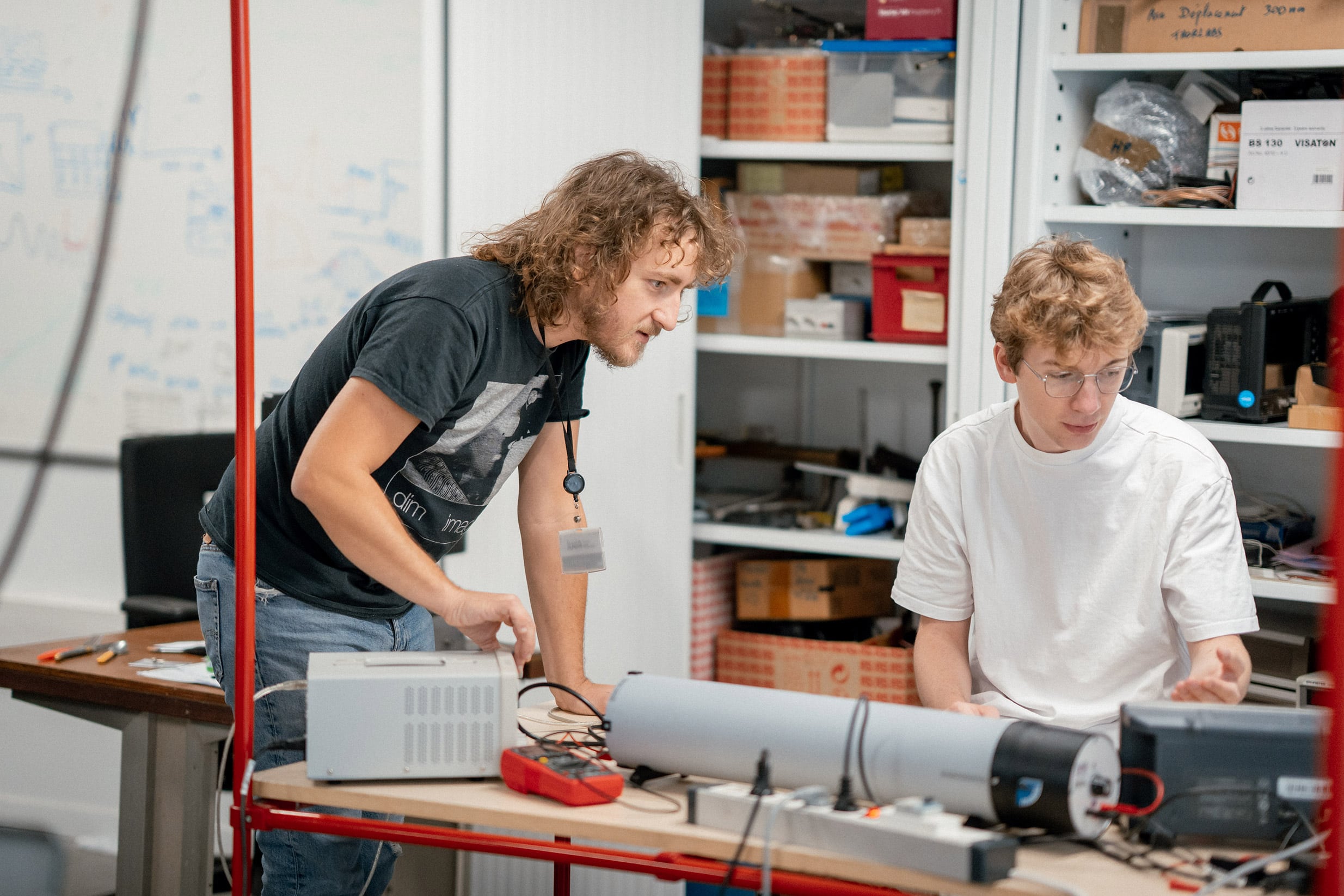
Students working on an electronic device

Building the technologies behind everyday innovation

Embedded electronics are now essential across industries, from healthcare and mobility to energy, telecommunications and smart manufacturing. This programme combines advanced electronics, real-time computing and microelectronics with hands-on engineering projects, preparing graduates to design reliable, efficient and intelligent systems that respond to today’s technological challenges and tomorrow’s innovations.

Choose the specialisation that matches your ambitions

Build a strong foundation in advanced electronics before tailoring your studies through one of two specialised pathways. Choose Embedded Electronics Systems to master real-time computing, FPGA design, microcontrollers and connected systems, or Microelectronics and Nanotechnologies to explore semiconductor physics, sensors, optoelectronics and next-generation electronic devices. Both tracks combine lectures, laboratory work and hands-on engineering projects to prepare you for high-demand careers.

Embedded Electronics Systems
Microelectronics and Nanotechnologies
Programme highlights

A teacher and a student are working together
Project-based learning

Work on real engineering projects supervised by academic experts and industry professionals.

Students working together on a computer
Professional internships

Gain valuable international experience through two internships integrated into the programme.

Students are laughing around a table
Career opportunities

Prepare for careers in embedded systems, electronics, microelectronics, IoT, semiconductor technologies and R&D, with opportunities to pursue a PhD.

Why choose JUNIA?

JUNIA combines academic excellence with one of the strongest research ecosystems among French engineering schools. Study on the vibrant campus of Université Catholique de Lille, in a dynamic European city just one hour from Paris, Brussels and London. International students benefit from a multicultural environment, personalised support and strong connections with industry and research.


Discover why international students choose JUNIA

Our campuses

Our Training facilities

Campus at Lille
Campus at
Lille
Discover
Students sitting on the stairs of the Palais Rameau
Admissions

Start your journey

Applying to JUNIA is simple and fully supported by our admissions team. Your application is assessed through an academic review and an interview, allowing us to understand both your background and your motivation while guiding you throughout the process.

Admission requirements

Partenaires et certifications

Tuition Fees

Tuition varies depending on the programme and academic year. For details on tuition rates, payment options, and available financial aid, please visit the page dedicated to tuition.

Découvrir les frais de scolarité
Agenda

Les temps forts et événements de JUNIA

Consulter notre agenda
Aerial photo of the Palais Rameau
19 Sep
Lille
Palais Rameau Heritage
European Heritage Days

On Heritage Day, come discover the richness of our history, culture, and local heritage. This special day invites you to explore JUNIA’s iconic sites, such as the Palais Rameau, and to take part in guided tours, workshops, and activities designed for all ages.

Palais Rameau Heritage
Colleagues are discussing a magazine
24 Sep
Lille
Electronics
JUNIA Connect – Electronics

Join this JUNIA Connect event focused on electronics and explore the potential of embedded and connected systems to develop your future products. Talk with JUNIA experts to come up with innovative solutions tailored to your challenges.

Electronics
Two students are conducting an experiment with a liquid on a scale
08 – 10 Oct
Lille
Innovation Science
Science Festival

To celebrate Science Day, JUNIA is opening its doors to give you a whole new perspective on engineering! The program features workshops, experiments, demonstrations, and meet-and-greets that invite people of all ages to explore science in a fun and interactive way.

Innovation Science
Colleagues are discussing a magazine
15 Oct
Lille
JUNIA Connect – Continuing Education

Join this JUNIA Connect event focused on continuing education and discover how to support your teams’ skill development as their roles evolve. Talk with JUNIA experts to design training programs tailored to your specific challenges.

17 Oct
Lille
Open House

Discover JUNIA, the leading engineering school for the transitions of tomorrow.

During our Open House events, meet our students, faculty, and staff, tour our campuses, and learn about the programs that prepare you for major challenges in industry, digital technology, agriculture, food, and the environment.

This is a unique opportunity to discuss your career plans, explore our HEI, ISEN, ISA, and XP programs, and envision yourself at a school that is committed, innovative, and open to the world.

Our brochure

Find all the essential information about the training programmes in our brochure.

Download the brochure
FAQ

We'll answer your questions

Contact us
Who can apply to the Master in Electronics and Embedded Systems?

Applicants should hold a Bachelor’s degree in Electronics, Digital and Information Technology, IT Engineering, Physics or a related field, and demonstrate a minimum B2 level of English.

Can I specialise during the Master in Electronics and Embedded Systems?

Yes. You choose between two specialisation tracks: Embedded Electronics Systems or Microelectronics and Nanotechnologies, allowing you to tailor your studies to your career ambitions.

What career opportunities are available with the Master in Electronics and Embedded Systems ?

Graduates can work as embedded systems engineers, electronics design engineers, FPGA engineers, semiconductor engineers, IoT specialists, hardware developers or R&D engineers. The programme also offers a strong research component for students interested in pursuing a PhD.