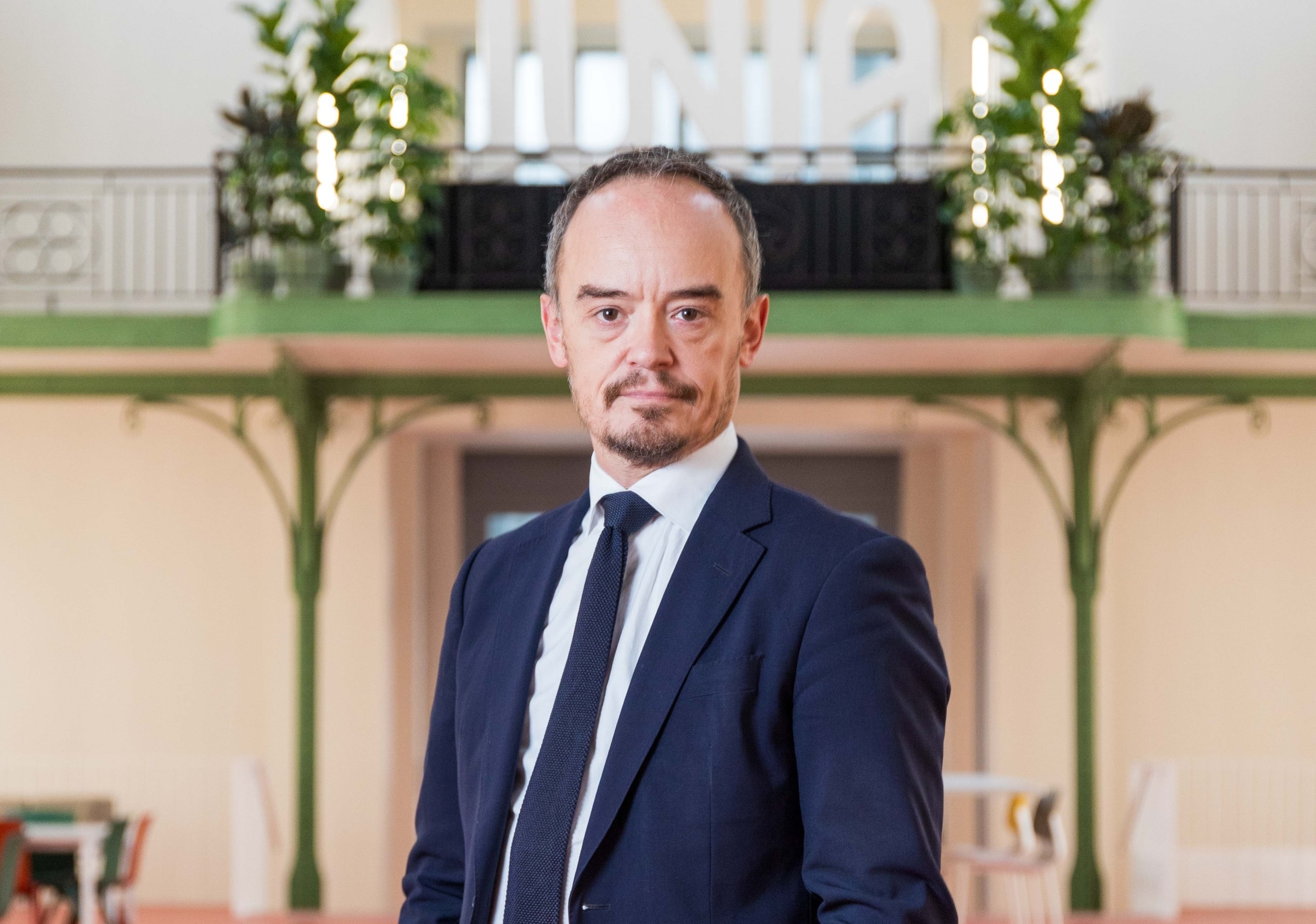
Benoît Cambier, president of JUNIA, and the Board of Directors have appointed Alexandre Rigal as CEO of our prestigious engineering school. He will assume his duties on June 1, 2024.
Alexandre Rigal will succeed Laurent Espine as CEO of JUNIA from July through December 2023.
“It is with enthusiasm, pride, and motivation that I am preparing to join JUNIA, its staff, and its students. Our school’s expertise lies at the heart of society’s major transformations. At a time of major challenges—including the ecological and energy transition and digitalization—JUNIA must, now more than ever, train the engineers of tomorrow who are capable of envisioning and supporting these changes. JUNIA remains an essential pillar of technological progress through its recognized degrees and research activities. It must provide unwavering support for our companies’ transitions, working closely with local communities.”
Virginie Noirot, Director of Human Resources and Transformation, and Aymeric Gillet-Chevais, Director of Academic Operations—who had been serving in an interim capacity—will hand over the reins to Alexandre Rigal on June 1, 2024.
Our new CEO will be tasked with continuing the transformation process already underway and making JUNIA a leading institution for transitions dedicated to its students’ success.
"It's Not Just an Option" Charter: A Strong Commitment to Prevention and Student Safety
15 July 2026
Discover the “C’est Pas 1 Option” (CP1O) charter, a major commitment to preventing risky behavior, addiction, harassment, and gender-based and sexual violence in higher education institutions. Adopted by JUNIA in 2020, this initiative is based on eight key principles, combining awareness-raising, training, and concrete actions to ensure a responsible and safe student club life.
A version revised in 2024 to address new challenges
Since its first publication in 2012, the CP1O guide has been regularly updated to better meet students’ needs and comply with legal requirements. The 2024 revision includes updated guidelines on health and legal standards, as well as concrete proposals for strengthening prevention in everyday life.
JUNIA: A Strong Commitment to Prevention
At JUNIA, the administration, the JUNIA Sports Association, and the student councils at the various campuses have been signatories to the CP1O charter since 2020. This commitment reflects a shared desire to promote responsible practices and to comply with safety standards and internal regulations.
The 8 Fundamental Principles of CP1O
Encourage collaboration between administration and student organizations, with the support of specialized external stakeholders
Training Student Life Staff in Prevention
Identify risky behaviors and potential hazards
Raise awareness among all students and staff at the institution
Implement practical tools and measures to support prevention
Recognizing and Addressing Addiction Situations
Combat gender-based and sexual violence and respond quickly when needed
Sustaining efforts toward continuous improvement
A training program to raise awareness
On November 23, 2024, JUNIA hosted representatives from the BNEI for a training day dedicated to student associations and clubs. This event provided an opportunity to share best practices and strengthen our collective commitment to prevention. Through the CP1O charter, JUNIA is taking a proactive approach to fostering a fulfilling, respectful, and safe student life. Let’s continue working together to build a campus where everyone can thrive with confidence.
Alexandre Rigal, CEO of JUNIA, speaks to CCI France
15 July 2026
At the invitation of CCI France, Alexandre Rigal presented JUNIA’s vision as a strategic partner to businesses amid industrial, digital, and environmental transitions.
Speaking to CCI France, Alexandre Rigal, CEO of JUNIA, discussed the industrial, digital, environmental, and societal transitions that companies and regions are currently undergoing. In light of these changes, he emphasized the need for partners capable of providing long-term support for the transformations underway.
JUNIA positions itself as a strategic player in this process, drawing on training, innovation, and applied research.
Continuing education programs tailored to economic realities
With locations in Lille, Bordeaux, and Châteauroux, the school offers continuing education programs tailored to the economic realities of businesses, their needs for skills development, and changes in the workplace.
A Strong Local Presence Supporting Businesses
Thanks to its strong local presence, scientific expertise, and close ties to the professional world, JUNIA trains employees who are ready to tackle the challenges of today and tomorrow.
On Thursday, October 16, 2025, JUNIA presented its new strategy for 2035 during a press conference led by Alexandre Rigal, the school’s president. Titled JUNIA2035 – Transformation(s), this roadmap marks a new phase in the engineering school’s development.
A History, a Legacy, and a Vision for the Future
“JUNIA is a history, a legacy, but also a vision for the future,” Alexandre Rigal noted in his opening remarks. Born from the merger of three prestigious engineering schools, JUNIA today embodies an engineering model rooted in tradition yet focused on innovation and the transitions ahead. This strategy is part of a ten-year plan: ten years to grow alongside our partners, support the systemic transitions our world is undergoing, and prepare for the school’s 150th anniversary. A single guiding principle drives this approach: “How do we want to be of service?”
Three Key Areas for Sustainable Transformation
The result of a collaborative effort involving more than 270 contributors, JUNIA2035 is structured around three main areas:
To train a new generation of engineers who are active agents, capable of combining technical excellence with societal impact
Bringing science and society together by making research accessible, visible, and useful to everyone
Strengthen JUNIA’s role as an economic and social actor serving local communities and the public interest
« L’ingénieur de demain ne sera pas seulement un expert technique, mais un passeur d’innovation capable de relier sciences et société, et de donner ainsi du sens à son métier. »
A school that is changing because the world is changing
For JUNIA, a modern engineering school is one that is rooted in technology and proud to embrace it. It is also a school that is evolving, because the world is changing—and its role is to understand these changes in order to better support them. This vision is already taking shape today through several key initiatives:
a three-year educational reform to reinvent engineering programs;
the launch of an educational network focused on artificial intelligence;
the opening of an educational innovation center on the Bordeaux campus.
Supporting businesses, regions, and major transitions
JUNIA aims to be a key player in the energy, digital, and environmental transitions. Working alongside businesses, regions, and citizens, the school seeks to train engineers who are active agents of change and catalysts for innovation, capable of bringing about sustainable transformation in society. Through JUNIA2035 – Transformation(s), the school reaffirms its ambition: to train engineers who are active agents, serving businesses, regions, and the major transitions.
With a 3-star “Bienvenue en France” rating (the highest level), JUNIA is recognized for the quality of its hospitality toward international students, thereby reaffirming its commitment to international outreach.
What is the “Bienvenue en France” label?
« La qualité de l’accueil des étudiants internationaux est un enjeu fondamental pour l’internationalisation et l’attractivité de notre enseignement supérieur. Le label « Bienvenue en France » est délivré aux établissements désireux de mettre en valeur leurs dispositifs d’accueil. Il est délivré pour 5 ans par Campus France et validé par une commission indépendante. »
A Job That Paid Off
Following an audit conducted by Campus France in June 2024, our engineering school has retained its 3-star “Bienvenue en France” rating, thereby confirming its international outreach. This Level 3 rating recognizes the school’s efforts to provide a high-quality welcome and concrete support for our international students (accessibility of information, enhanced orientation programs, academic support, quality of campus life, post-graduation follow-up, etc.).
This is a wonderful recognition of our teams and all the hard work they’ve put in to ensure that every day, all the international students who join us receive a warm welcome and high-quality support. International engagement is in JUNIA’s DNA—we’re committed to ensuring that all our students have a fulfilling and enriching academic experience, open to the world and to others. Welcome to France, and welcome to JUNIA.